
Your First Steps into Temporary Structural Engineering: A Clear Path to Mastering Shoring Design

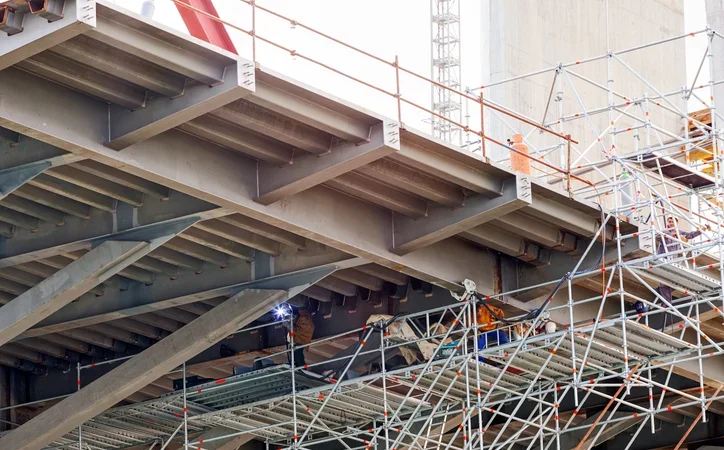
When a skyscraper rises or a bridge spans a river, few pause to consider the hidden support systems that make construction possible. Temporary structural engineering, particularly shoring design, is a field where creativity meets precision, shaping structures that exist only long enough to allow the permanent to take form safely and efficiently.
Understanding Temporary Structural Engineering and Shoring Design
Temporary structures are the unsung heroes of construction sites. They provide vital support during phases when a permanent structure is incomplete or vulnerable. Whether bracing a multi-story building or supporting a section of an expressway, shoring systems prevent collapses, protect workers, and ensure project deadlines remain intact.
Yet, these solutions carry inherent risks. Unforeseen loads, shifting site conditions, and tight timelines can all magnify the consequences of a miscalculation. Successful shoring design relies not only on textbook knowledge but also on anticipating challenges before they escalate.
At its core, effective shoring design is built on three principles: understanding the physical forces at play, meticulously planning for every scenario, and harnessing the right materials for the job. This blend of science and ingenuity transforms the abstract into something solid and real.
Laying the Groundwork: Project Assessment and Initial Planning
Every successful project begins with a clear-eyed assessment. Engineers must analyze the existing site, charting out soil types, load paths, and environmental influences. Only by understanding site-specific nuances can load requirements be accurately defined.
Collaboration is key. Early conversations with contractors, architects, and suppliers ensure that the shoring solution aligns with broader project goals. Regulatory standards and local codes define another layer of constraints, often dictating specific design approaches or material choices that cannot be ignored.
Case Study: Innovative Shoring Solutions for a Multi-Story Building
Take the example of a complex multi-story building in a dense urban environment. The challenge? Supporting a massive slab while accommodating limited workspace and aggressive scheduling.
Engineers turned obstacles into opportunities by embracing creative solutions. Custom-fabricated shoring towers, precisely modeled to fit tight clearances, replaced standard frames. Advanced load monitoring was integrated to provide real-time feedback, allowing further optimization on the fly.
Material selection proved critical. Lightweight, high-strength alloys reduced manual handling risks and expedited assembly. Partnering with suppliers who specialized in logistics was necessary to coordinate just-in-time delivery without disrupting neighboring sites.
This approach delivered not only safety and stability but also valuable lessons. Early-stage modeling, combined with flexible planning, resulted in a finished structure that met all performance benchmarks without delays or budget overruns.
Engineering Calculations: From Theory to Practical Application
Shoring design is where mathematics leaves the page and enters the construction site. Engineers calculate anticipated loads from fresh concrete, wind, and even the weight of workers themselves. Stability checks confirm that each component can safely transfer forces without buckling or shifting unexpectedly.
Material choice is a science in itself. Aluminum may offer significant weight savings over steel, but only if the specific load paths allow. Each scenario demands a tailored solution based on detailed calculations and an understanding of the unique site constraints.
Design verification, traditionally a manual affair full of sketches and tables, is increasingly supported by specialized software. Still, hands-on knowledge and experience remain irreplaceable, especially when software outputs must be cross-checked against real-world expectations.
Integrating Design with On-Site Execution
Even the best design can falter if not integrated smoothly on-site. Close coordination with construction teams ensures that shoring systems are assembled correctly and remain adaptable to evolving site conditions.
Logistics, too, play a decisive role. Timely equipment delivery is essential, as delays can ripple through the project schedule. Unexpected challenges will always arise, perhaps a delivery truck is delayed or a foundation shifts, so the best engineers adapt, revising plans on the spot to keep the project on track.
Ensuring Safety and Compliance Throughout the Project Lifecycle
Safety is not a one-time checkbox. Quality control procedures must be established from day one, with regular monitoring and inspections at every stage. When risks surface, contingency planning steps in to protect workers and minimize costly downtime.
Documentation is also vital. Adhering to regulatory requirements is not just about avoiding penalties; it’s about ensuring that every stakeholder can trust in the stability and reliability of the temporary structure.
Continuous Improvement: Learning from Each Project
No two projects are exactly alike, but every experience adds to an engineer’s toolbox. Post-project evaluations help teams spot what worked and what didn’t, feeding those lessons into future designs.
Incorporating new technologies, such as advanced modeling software or innovative materials, keeps shoring practices at the cutting edge. Yet, it is creativity and adaptability that truly set the best engineers apart. As experts often note, academic knowledge is not enough; hands-on experience is what shapes real expertise.
Building Your Career as a Temporary Structural Engineer
For those entering this field, essential skills include structural analysis, clear communication, problem-solving under pressure, and an appetite for lifelong learning. Mentorship and hands-on site experience accelerate the journey from theory to practice.
Staying updated with industry trends, regulatory changes, and best practices is crucial. Reliable resources, such as NadeauSDM ingénieur coffrage, offer valuable insights into real-world challenges and solutions.
The path to mastering shoring design is steep but rewarding, filled with moments where innovation truly supports the foundations of tomorrow’s world.