
How Packaging Automation Is Helping Manufacturers Respond Faster to Demand Fluctuations and New Product Launches

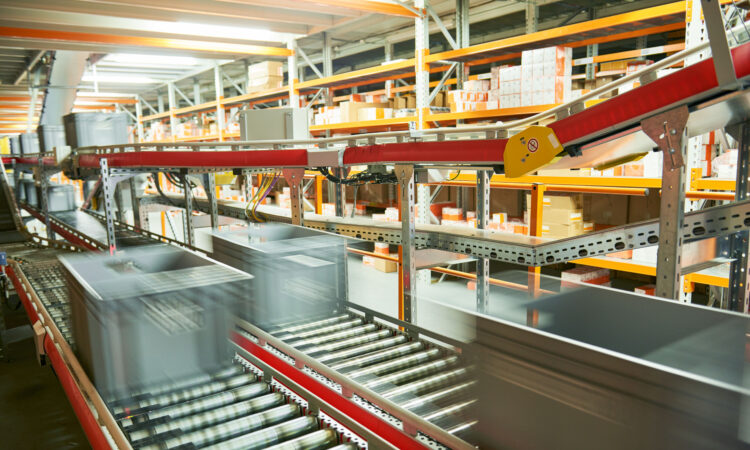
There was a time when a new product launch meant months of manual line reconfigurations, retraining headaches, and a production team stretched thin before the first case ever shipped. For many manufacturers, that experience is still the norm. But a growing number of operations across food and beverage, CPG, pet food, and industrial manufacturing are discovering that packaging automation is doing more than cutting labor costs. It is fundamentally changing how fast they can move.
The ability to respond quickly to market shifts is no longer a competitive advantage. For most manufacturers, it is a baseline requirement. Retailers want new SKUs on shelves faster. Consumer preferences can shift in a quarter. A competitor can launch a new format and capture shelf space before you finish your line trials. In this environment, agility is the metric that matters, and the right automation investments are what make agility possible at scale.
Why Demand Fluctuations Are a Packaging Problem First
Ask most plant managers where they feel demand volatility first, and the answer is almost always the packaging line. Upstream processes like mixing, filling, and forming can often be adjusted with recipe changes or minor equipment tweaks. But when your customer suddenly needs a different case count, a new tray format, or a seasonal promotional package, the packaging end of your line is where the real disruption happens.
Manual packaging lines compound the problem. When SKUs change, workers need time to learn new configurations. When volumes spike, you are scrambling for labor that may not be available. When a new product launches, you are often hand-building test runs while your main production line sits partially idle.
These are not edge cases. They are recurring realities for any manufacturer operating in a high-SKU, demand-driven environment. And they are exactly the scenarios that well-designed automation addresses most effectively.
Flexibility Is Built In, Not Bolted On
One of the most common misconceptions about automation is that it trades flexibility for speed. The idea is that an automated line is optimized for one format and one format only, making it harder to adapt than a crew of operators who can just follow new instructions.
That may have been partially true twenty years ago. It is not the reality of modern packaging automation.
Today’s automated systems, when properly specified and integrated, are designed with changeover in mind. Quick-change tooling, servo-driven adjustments, and recipe-driven HMI controls mean that switching from a four-count tray to a six-count tray, or from a regular slotted case to a display-ready retail format, can happen in minutes rather than hours. The key is that flexibility needs to be engineered into the system from the start, not treated as an afterthought.
This is one area where the integration process matters enormously. A machine purchased in isolation may be capable of running multiple formats, but without proper controls programming, line balancing, and upstream and downstream alignment, that capability often goes unrealized. An integrator who builds the full system with changeover requirements as part of the original design brief will deliver a line that actually performs as specified when the moment comes to switch.
New Product Launches: Where Automation Gives You the Speed Advantage
Launching a new product is one of the most stressful events in a manufacturing operation. You are managing new formulas or materials, coordinating with procurement on packaging supplies, working against a retailer’s planogram deadline, and trying to produce initial runs that meet quality standards before you have had enough cycles to dial everything in.
The packaging line is almost always the critical path. And on a manual line, every new launch introduces variables that slow you down: new operator instructions, new QC checkpoints, new pack patterns, and new labeling requirements.
Automated systems handle new product launches differently. Coded recipe parameters mean that once a new SKU is programmed and validated, it can be called up and run repeatably. An operator does not need to remember the specific case tuck sequence or the correct gap spacing on a tray former. The machine runs the recipe. The output is consistent from the first case of a new run.
Coding and marking integration is another area where automation accelerates launches. New product codes, lot numbers, date codes, and retail labeling requirements can be pushed to coders and printers as part of a recipe change rather than managed through separate manual processes. For manufacturers dealing with multiple retail customers who each have their own labeling requirements, this kind of integrated coding capability is not a luxury. It is a practical necessity for moving fast without introducing compliance errors.
Handling Volume Swings Without Scrambling for Labor
Seasonal demand peaks are another area where packaging automation changes the math. A food manufacturer going into the holiday season, a pet food company responding to a promotional push, or a CPG brand supporting a new retail listing all face the same challenge: how do you surge output without a corresponding surge in headcount?
On a manual line, the answer has always been overtime, temp labor, or both. Neither option is ideal. Overtime drives up per-unit labor costs and fatigues your core workforce. Temp labor introduces quality and safety variables that your experienced employees have long since sorted out.
An automated line scales differently. The machines do not need overtime pay. They do not call in sick during your peak week. If your line is properly sized and your upstream materials supply is reliable, you can push higher throughput by running longer shifts with the same trained crew managing the equipment rather than doing the physical work.
For mid-sized manufacturers especially, this is one of the clearest ROI arguments for automation. The ability to absorb a 20 or 30 percent volume increase without a corresponding increase in headcount changes your cost structure in ways that show up directly on the P&L.
The Integration Factor: Why Line-Level Thinking Beats Machine-Level Thinking
Here is a point that does not get enough attention in conversations about automation and agility: the speed at which your line responds to change is a function of the whole system, not any single machine.
You can have the fastest case erector on the market, but if it is not matched to your downstream palletizer speed and your upstream filler output, the gain disappears. You can invest in a flexible tray former with quick-change tooling, but if the labeler downstream cannot follow the same recipe-driven changeover process, you have created a new bottleneck.
This is the core argument for working with an integrator rather than assembling a line from individually purchased machines. A qualified integrator looks at the entire process: throughput requirements, SKU mix, changeover frequency, controls architecture, safety systems, and long-term service needs. The result is a line designed to operate as a system, where flexibility and speed are outcomes of the whole design rather than isolated features of any one piece of equipment.
When demand shifts, an integrated line responds as a unit. When a new product launches, a single recipe change propagates across the relevant equipment. When something needs adjustment, a standardized controls platform means your maintenance team or a service technician can diagnose and correct the issue without deciphering three different machine control systems from three different manufacturers.
That is the practical difference between buying machines and building a line.
What Manufacturers Should Think About Before Investing
If agility is the goal, there are a few questions worth asking before committing to any automation investment:
How many SKUs do you run today, and how many do you expect to run in three years? If your SKU count is growing, flexibility requirements should be a primary design criterion, not a secondary one.
What are your typical changeover frequencies? A line that changes over once a week has different requirements than one that changes over three times per shift. The more frequent the changeovers, the more critical it is that the system is engineered for fast, repeatable format changes.
How integrated are your current controls? If your existing equipment runs on disparate control systems with no common communication layer, adding new automation without addressing that foundation will limit your ability to run recipe-driven operations across the full line.
Who will support the system after installation? A line that runs well at commissioning but lacks adequate documentation, training, and service support will lose its performance edge quickly. Agility depends on uptime, and uptime depends on a support structure that extends beyond the sale.
Agility Is an Engineering Decision
Manufacturers who are genuinely able to respond faster to demand fluctuations and product launches did not get there by accident. They made deliberate investments in systems designed for flexibility, built by people who understood that the goal was not just to automate tasks but to create lines that perform reliably across changing conditions.
Packaging automation, when designed and integrated thoughtfully, is one of the most effective tools available for building that kind of operational agility. The manufacturers who figure that out earliest tend to be the ones who hold their shelf positions, fulfill new retail commitments on time, and scale without the labor chaos that slows everyone else down.
The technology is there. The question is whether your line is built to take advantage of it.